How to Distribute a Government PSA Nationally
How do you distribute a government PSA nationally?
National government PSA distribution starts with an approved public education objective, clear agency authority and creative clearance, and an audience plan by geography, language, and channel. Broadcast-ready files are then delivered to appropriate outlets, supported by direct outreach, monitored where possible, and reported with transparent definitions. PSN has supported federal, state, and local public education efforts and can combine donated TV and radio with approved paid channels when timing or coverage requirements call for them.
Establish approvals and responsibilities
Identify the contracting or sponsoring agency, the party to provide final approval, accessibility and language requirements, usage rights, required disclaimers, and any media or public affairs clearance process. Set the official call to action and destination before creating multiple spot versions. Document what the agency must approve before files are trafficked or a paid placement is committed.
Define national and local audiences
“National” does not mean every audience needs the same message or media mix. Segment the plan by priority states or DMAs, populations, languages, and local relevance. TV, radio, cable, and digital or place-based options can be selected around those needs. A national distribution list creates broad opportunity; market-level outreach makes the campaign more relevant to individual outlets.
Prepare and distribute usable creative
Supply approved broadcast formats and lengths, captions for video where required, audio files, transcripts, identifiers, sponsor attribution, and an advisory explaining the public benefit. PSN can distribute video electronically, provide downloadable radio files, and host approved PSA materials in PSAbank for on-demand access. A delivery log records where assets were offered; placement evidence is collected separately.
Promote and monitor the campaign
Contact station and network decision-makers, explain the relevance of the issue, and follow up in underserved markets. Monitor TV through Nielsen and radio through Media Monitors where covered; include PSN Tracked Airings from other documented methods with clear labels. Report participating outlets, airings, geography, dayparts where available, estimated impressions, and media value. Use agency-owned response indicators such as resource visits or service inquiries to evaluate the public education objective.
Keep guaranteed media distinct
If the agency authorizes paid or guaranteed placements, specify the budget, inventory, dates, proof, and approval process in the media plan. Report paid delivery separately from discretionary donated carriage. Procurement terms, agency policies, platform rules, and accessibility requirements should govern the final implementation.
⭐️ Related guides: Distribution process · Donated versus paid
About PSN
WATCH: How We Get Your PSAs Seen
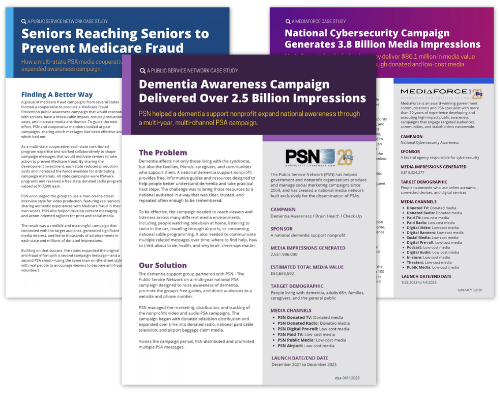
See PSN in action with our case studies!